2026 Fellows
Ainehi Edoro
Dr. Edoro is a Mellon Morgridge Associate Professor of English and African Cultural Studies at the University of Wisconsin–Madison. Her research explores how stories offer new ways of thinking about the art, politics, and philosophy of world-making. She has extended these topics into research on digital culture, examining how social media platforms serve as spaces for experimenting with modes of perception and world-building.
Dr. Edoro’s research project as a fellow at The Center, “Building an LLM Lab,” is concerned with a fundamental question facing the humanities: what does the automation of writing mean for disciplines built on the written word? Edoro will be building a Large Language Model (LLM) lab studying how students use LLMs and, more importantly, how students perceive the changing nature and function of writing as a result of generative AI writing technologies. Answers to these questions will inform scholars of how we can expect the future of the humanities to unfold.
Devin Kennedy
Dr. Kennedy is Assistant Professor of History and Evelyn and Herbert Howe-Bascom Professor of Integrated Liberal Studies. He works across business and economic history, the histories of science and technology, and science and technology studies, and how those fields have intersected with or influenced each other’s historical development. His first book, Coding Capitalism: Computers and the Remaking of the Postwar US Economy (Columbia University Press, 2026), argues the discipline we now know as computer science importantly developed from attempts to solve problems in industries, like manufacturing and finance, who were early adopters of computer systems.
His project at The Center, “Theoretical Computer Science and the Limits of Computation,” will provide a history of the field of theoretical computer science and how it has pursued the question What are the limits to what a computer can know? Through archival research in the history of philosophy and computing, Kennedy’s project illuminates how computer scientists have understood what computer systems can know, giving us crucial context for our contemporary discussions about attributing knowledge to current AI systems.

Catalina Toma
Dr. Toma is professor of communication science at the University of Wisconsin–Madison. Her research examines how people understand and relate to one another when interacting through digital communication technology. She has especially focused on the impact digital communication has on how individuals present themselves to others online and the kinds of relationships the internet fosters.
Her project as a fellow with Un-AI is “Artificial Intelligence (AI) and Self-knowledge: How Engagement with Conversational AI Shapes Adolescents’ Sense-concept.” She will study chatbots/conversational AI and how these emerging technologies shape adolescents’ social, emotional, and epistemic development. Pursuing the question How do adolescents come to know themselves through conversations with AI?, Dr. Toma’s research illuminates both the promise and the peril of machine participation in one of humanity’s most intimate pursuits: the search for self-knowledge.
Anja Wanner
Dr. Wanner is the Enid H. Anderson Professor of English at the University of Wisconsin–Madison. A trained syntactician, her research has spanned topics ranging from the syntax and semantics of English verbs, the form and function of the English passive, to linguistic variation within register and genre and on the impact of linguistic prescriptivism.
Her research at The Center will focus on “Linguistic Expert Knowledge / Knowledge Experts in the Digital Age,” which examines how artificial intelligence transforms our definition of linguistic knowledge and reshapes the notion of linguistic expertise. By situating the impact of AI-based language within the longer intellectual history of descriptivism (science-based approaches to studying linguistics) and prescriptivism (skills-based approaches), Dr. Wanner’s project will situate present-day anxieties about synthetically produced language within centuries-old debates about who gets to define linguistic knowledge and determine linguistic standards.
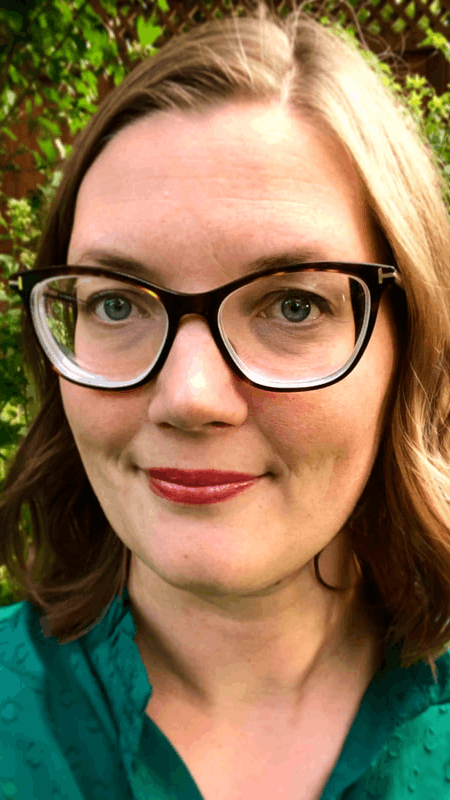
Nell Haynes (External Fellow)
Dr. Haynes is professor of anthropology at Saint Mary’s College in Notre Dame, IN. Her research focuses on Latin America, especially the question of who in those societies should be regarded as “authentically indigenous,” and how media and popular culture interact with that question. Among her work are the books Social Media in Northern Chile (2016) and How the World Changed Social Media (co-authored–2016).
Dr. Haynes’s research project at The Center will use participant observation and interviews to explore both the positive and negative effects of how increased access to art-making via AI image generators might affect our general understanding of art’s role in our lives. Dr. Haynes’s project is especially focused on how the cultural meaning and value people attach to various kinds of art might change with the widening use of AI technologies.
Lucy (Quanxin) Yang (Graduate Researcher )
Lucy Quanxin Yang (she/her/hers) is a Ph.D. student in political theory at the University of Wisconsin–Madison. She is mainly interested in the intersection between democratic theory and modern science and technology. Her dissertation, “decentralization before blockchain,” explores the “co-production” of pro-democracy visions of decentralization and various scientific paradigms from the industrial age to the information age.
Prior to studying at UW–Madison, she received an M.A. in philosophy from Renmin University of China (2022) and a B.A. in economics from Shanghai International Studies University (2019).